

Social selling. Selling on social. Dark social.
You must have heard at least a few ways of naming one of the most powerful strategies in B2B:
Building relationships with your clients through social media.
Today’s B2B marketing and sales no longer have the privilege of taking over their prospect’s buying journey: half of the buyers make up their minds about a solution they need before talking to a sales rep.
Because they don’t need sales to learn more about the solution. They check review platforms, read client feedback, visit your socials, read about you on LinkedIn, and ask their peers for recommendations.
And it’s your task to make sure this online journey turns the tables in your favor.
How? By creating memorable experiences that grab your audience’s attention even when they aren’t in the market for your offer.
Although it’s easier said than done (especially when you compete with hundreds of similar solutions in the B2B segment), we’ve analyzed five B2B brands that took their social selling strategy to the next level.
While using different approaches, all companies have come to the same result: you will never confuse them with their competitors, and they will be the first thing that comes to your mind when you think of a specific problem.
Let’s talk more about each of the strategies and valuable insights you can apply to selling on social.
Embrace community-led growth.
There are many people saying how B2B brands find success in their marketing strategies by creating value for the audience through community-led growth.
However, only a few talk about what it takes to do that.
Building a community on LinkedIn requires more than pivoting from being promotional to adding value.
It requires incredible consistency, deep customer knowledge, and (most importantly) a purpose.
To turn your market and product insights into valuable organic content for both their executives and brand ambassadors, you need to know what you’re trying to achieve.
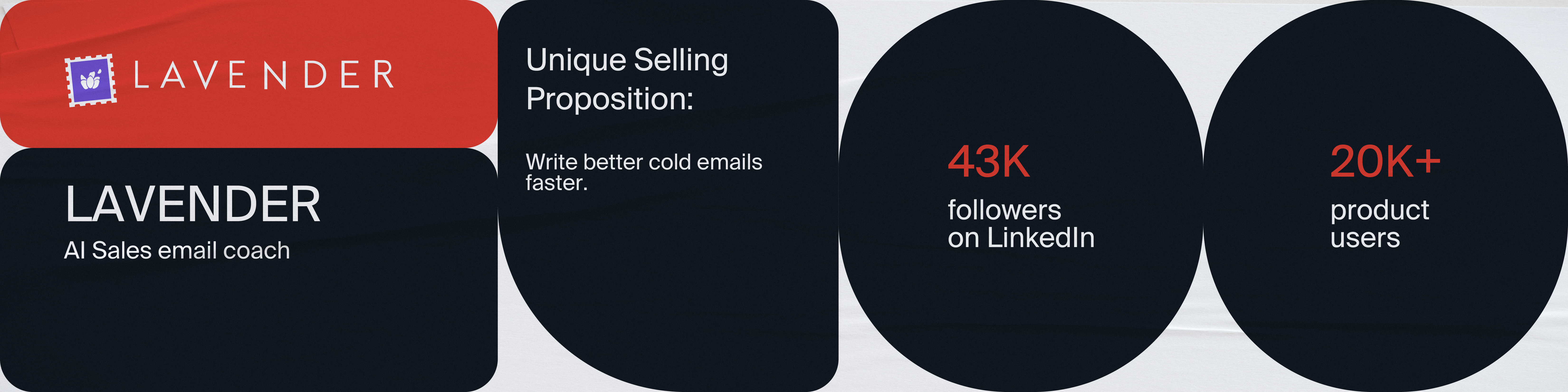
One brand that’s done well in this is Lavender.
With over 250,000 followers on the platform, the Lavender team has been incredibly consistent in educating (and entertaining) their audience about how modern sellers should think about cold emails.
Starting with posts on how to write better sales emails in 2020, Lavender has built one of the most well-known brands on the back of LinkedIn.
Today, Lavender launched one of the first Netflix-style streaming platforms, where sellers can learn how to write better emails with Lavender’s AI coach.
Here are 3 lessons you can take from Lavender’s community-focused strategy:
1. It’s not just building a community. It’s building a community-driving brand
Every post Lavender’s made was either educational and informative, or it was creative, helpful, and funny.
In lots of cases, it’s both.
How does Lavender manage to hit the sweet spot?
According to Jen Allen-Knuth, former Community Growth @ Lavender, the match happened because the team didn’t come in with the sole intention of creating a community.
They took a step back to find out what the audience wanted and needed to know, eventually coming together to create content that resonated.
Your audience moves from the awareness stage to joining a community when (and only when) they repeatedly find your activity valuable, entertaining, and helpful.
And Lavender managed to find a perfect blend.
Just take a look at the “3-Minute Sales School” series.
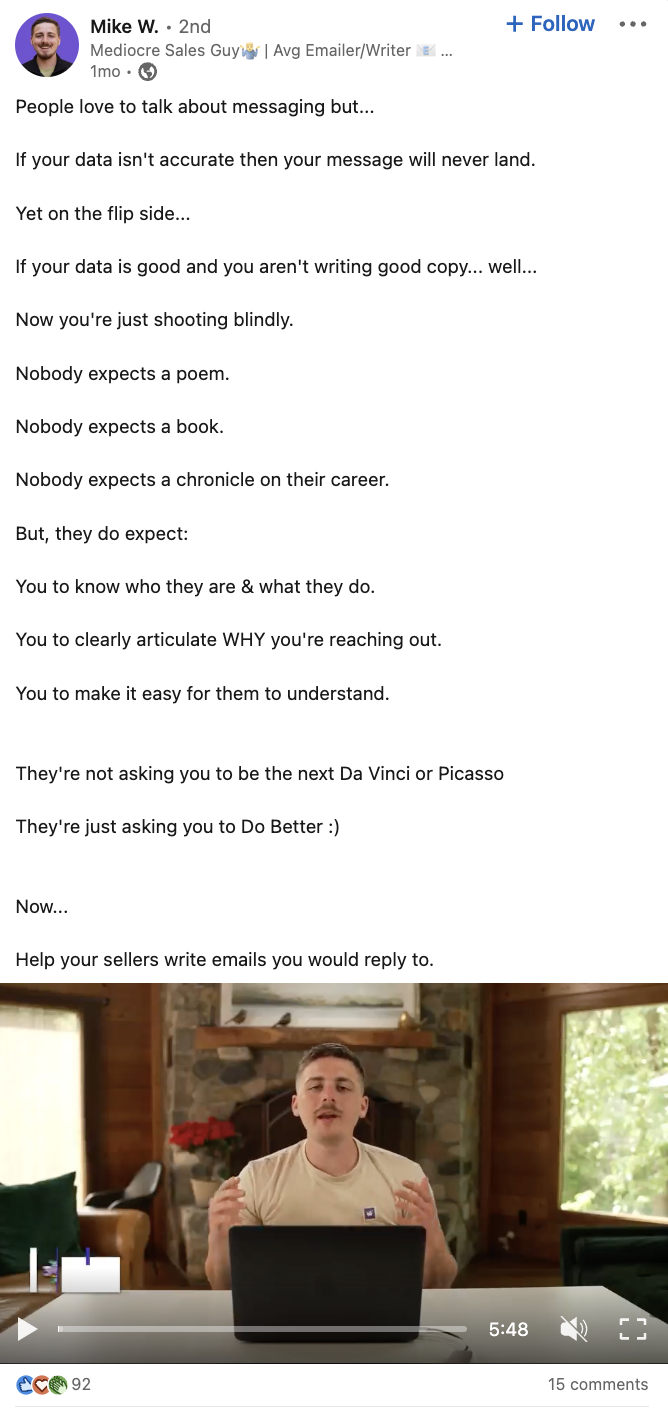
Mike Wander’s LinkedIn “3-Minute Sales School” update
The premise is simple: sales reps send their cold emails to Mike Wander and ask him to improve it in under 3 minutes.
Yet, instead of simply pointing out the final result, the team has turned the concept into a content series that:
→ Break down a real example
→ Provide valuable insights to improve your expertise
→ Entertain you with bloopers and jokes while you’re waiting to get to the good stuff
P.S. Although “3-Minute Sales School” has eventually turned into a full-scale media series on their streaming platform, the old format hasn’t gone away. The team goes on with the series to engage with the community on a regular basis.
Community is about consistency rather than a pretty picture, after all.
So, is it really worth it to wait for the perfect moment to engage with your audience?
2. Humanize your content
Because that’s exactly how prospects buy today.
Rather than hiding behind a corporate logo, Lavender engages with the community through people.
With their insights, their journeys, their hot takes, and their unique point of view.
And by following suit, you can use your team to build a community that is here for your solution.
Here’s some data to inspire you to build a community through a personal brand (if you’re not convinced already):
According to Refine Labs, personal LinkedIn profiles outperform company pages with 5x more engagement.
81% of B2B buyers are more likely to engage with someone with a strong personal brand.
3. Create idea-driven content
A huge part of Lavender’s success is that they power ideas with data and build around clearly defined business goals.
No matter which LinkedIn profile you’re scrolling or which LavenderLand video you’re binging, the company’s primary idea is always clear: They are here to help you write better emails faster so you can have more money and more deals.
And who doesn’t want that?
How do they do that, what are the upsides for you, and why they’re certain it works… everything revolves around one single idea that matters to the community.
And that’s why they keep coming back. Because they know what they’re getting from Lavender. They see the data that backs up the promise.
In a nutshell:
Make sure your content is intertwined with your audience’s business goals, and they will recognize the value of your brand.
Drive your brand with value-led content.
“It’s all about creating demand.” “Content is king.” “Add value with your outreach.”
We bet you’ve heard at least one of these statements during conversations about the state of B2B marketing and social selling.
And there’s nothing wrong with these takes.
The question here is, “How on earth do you actually use it in marketing?”
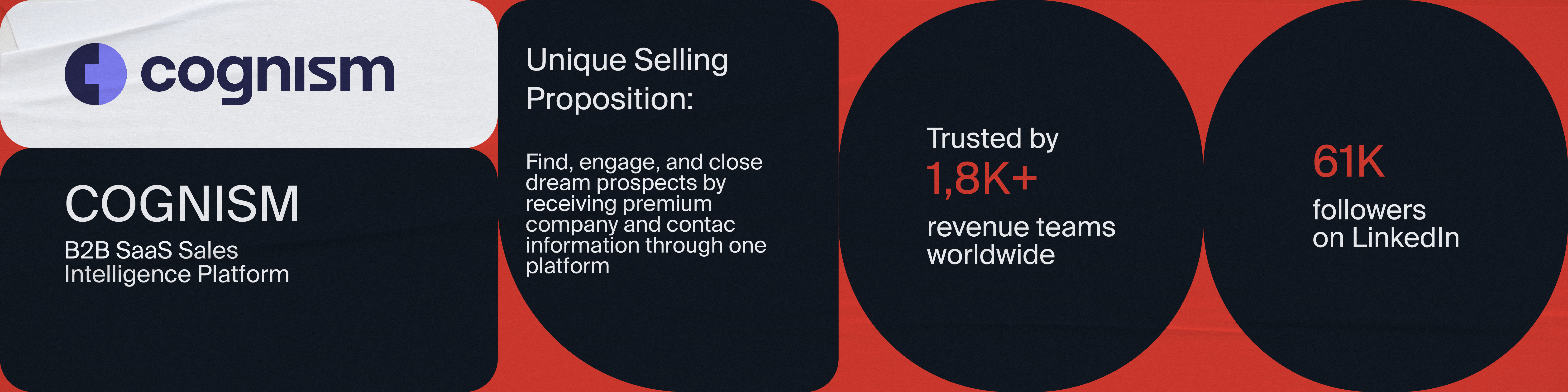
Well, you can do what Cognism does. For what it’s worth, this brand managed to get the most out of “making content their king.”
Starting as a FinTech startup back in 2015, today, Cognism is one of the most influential B2B sales intelligence software companies in the market.
Nearly 60K followers on LinkedIn (not counting the hundreds of thousands of followers coming from the company’s team), 2 newsletters, weekly webinars and live events, podcast episodes, and daily blog updates – Cognism seems to be everywhere.
Yet, they are not here to annoy their prospect into buying their product.
They are here to build demand and give expertise to the audience.
Today, 1,800+ teams use Cognism’s sales intelligence solution. And here are 3 major lessons we can learn from their social selling strategy:
1. Create content “value loops”
Creating content for the sake of creation simply won’t do. No matter how insightful or entertaining, in order to spark a dialogue with the audience, you need to actually be seen by them.
And that’s exactly the thing Cognism mastered by building a powerful media engine, “an always-on source of value-led content where our ICP can interact with us where they hang out.”
What does it mean?
Instead of throwing around bits of content here and there, come up with valuable and educational material that can be distributed across different channels where your target audience spends time.
These channels are also known as “value loops.” Let’s dive deeper into that one.
Known as places where your audience can get value on a regular basis, value loops are key for:
→ educating your out-of-market audience
→ building awareness and recognition for your brand
→ establishing solid rapport with your buyers
Here are some examples of value loops:
- newsletter
- podcast
- blog
- YouTube
Remember, value is key here. Without expert, relevant, and easy-to-apply information, you turn a value loop into a desert island with no interaction from your buyers.
2. Ideation without strategy = wasted time
When you’re getting started with demand gen and content, don’t rush into compiling all the topics you know something about into a content plan.
You’ll run out of things to talk about pretty fast. Faster than your audience has a chance to get to know you.
Instead, take the Cognism strategic planning prompt to make your content engaging and consistent:
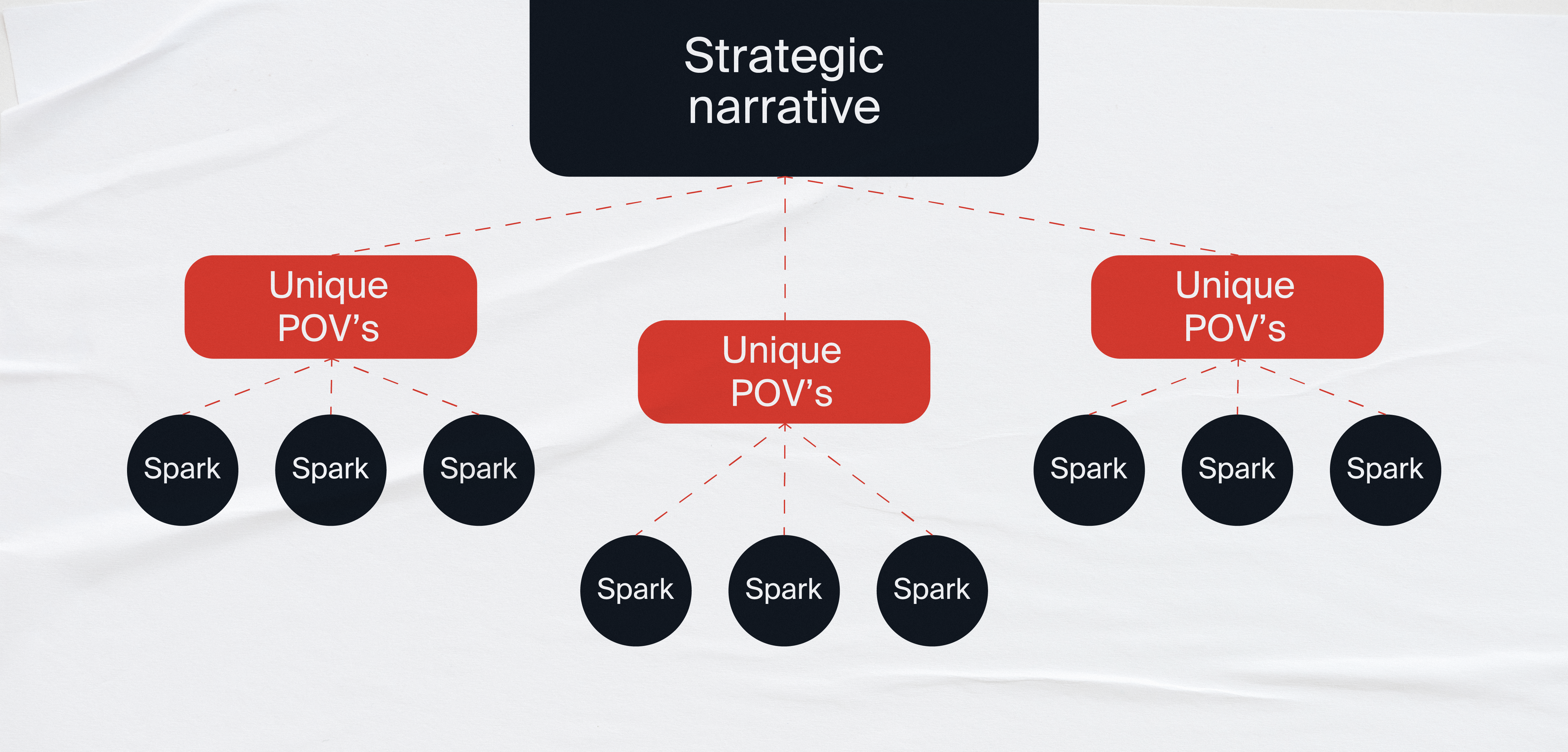
Develop an overarching idea you want to deliver to your audience, create separate “points of view” to share the strategic narrative with different core personas and use “sparks,” or smaller separate ideas to create actual content pieces.
Each content idea can be tailored for a value loop, meeting your buyers exactly where they’re at.
After you’re done with the strategy, you can safely proceed to the ideation part.
Here is a 4-step ideation process crafted by Obaid Durrani and Todd Clouser to get you started:
- Choose your marketing objective or business goal.
- Determine which content formats would help move you closer to that goal.
- Construct a full picture of the message you want to deliver and the action you want the viewer to take.
- Think of the absolute best way to execute this.
3. Mix organic growth with paid ads
When you’re investing resources in creating high-value content for your ICP, it’s only fair to make sure you show up in front of your audience.
Yet, here’s the thing:
No matter how eager you are to spend your money on a clear CTA, don’t drag your prospects straight to the bottom of the funnel. Use ads as a tool to power up your message and value.
Here are the LinkedIn ads campaign objectives outlined by Canberk Beker, Head of Paid @ Cognism:
- Reach for value-driven/social-proof LinkedIn content
- Traffic for content outside of LinkedIn
- Video views for video content
- Conversion for form submissions
If you’re looking for an example of an that goes beyond demo call conversions, we’ve got you covered:

Cognism paid LinkedIn ad for a new blog post
For anyone out there looking to promote a media product besides blog, Cognism has a great example of a paid LinkedIn ad leading the buyer to “Redefining Outbound”, the company’s podcast with insights into B2B marketing:
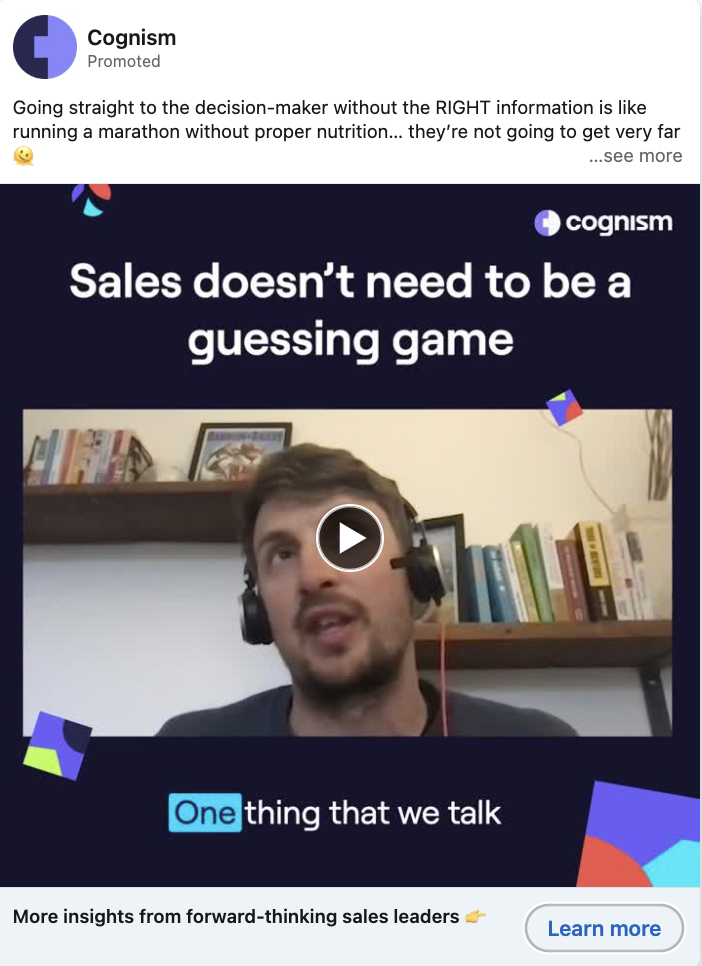
Cognism paid LinkedIn ad for a new podcast episode
For Cognism, conversion is among the objectives, not on top of them.
If you’re looking for more examples and inspiration, take a brief look at Cognism’s ad library on LinkedIn.
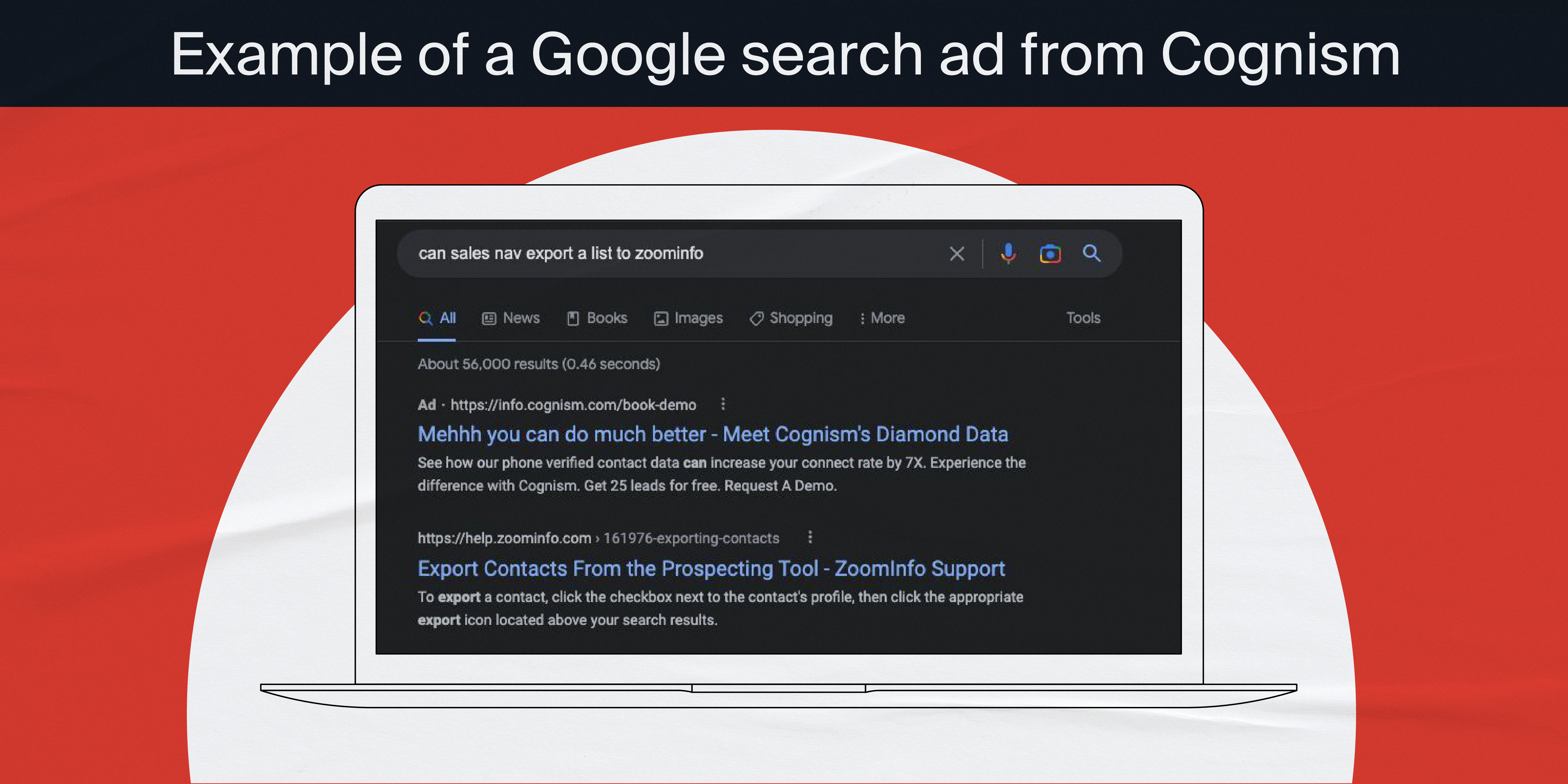
P.S. A bonus tip from Cognism: never stop trying to go beyond cliche B2B tactics to talk about your brand. Being original is definitely worth the effort when you’re trying to get remembered.
We mean… just look at this Google search ad:
Embrace the creator economy (while it’s hot).
Yep, that’s a B2B move as well.
No matter the industry and audience, people are more likely to purchase from the faces they trust.
And teaming up with influencers and thought leaders in your niche is a way to associate your brand with someone trustworthy.
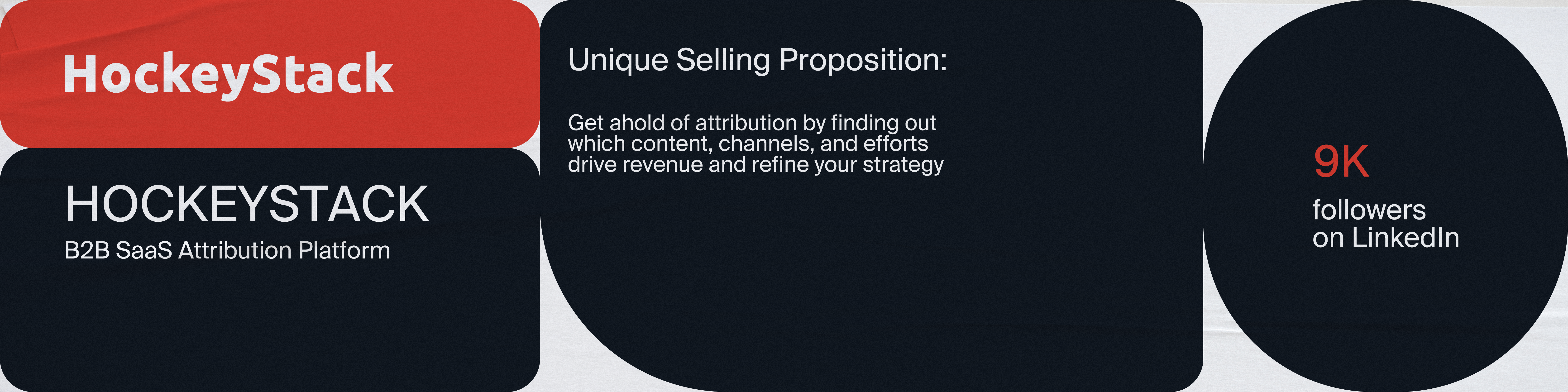
HockeyStack is a solid example of how nearbound marketing helps to win over your clients.
A SaaS platform for mapping out buyer journeys and marketing attribution, HockeyStack is designed for marketing leaders.
So, instead of becoming another no-name “educational” source, the brand has teamed up with thought leaders in B2B marketing to put a familiar face next to their brand.
Let’s take a look at The Flow, HockeyStack’s streaming media platform.
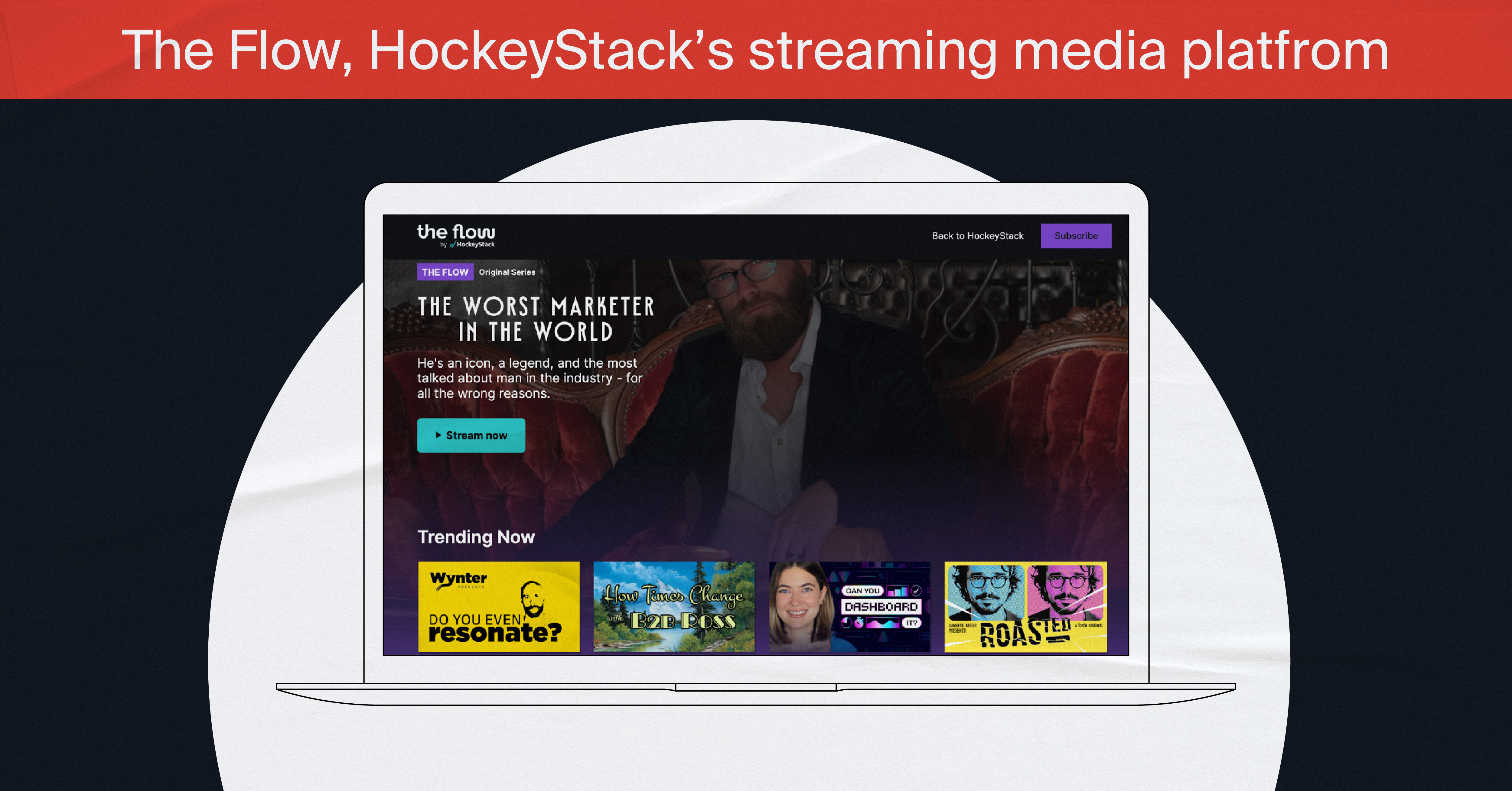
A quick glance at a landing page, and you can easily spot shows featuring marketing leaders from Lavender (Todd Clouser), Wynter (Peep Laja), and Cognism (Canberk Beker).
You might not know these names, but if you’re a B2B marketer, you’ll recognize these faces. You see them in your LinkedIn feed almost every day. You go to these people for expert advice. You know you can trust them.
And just like that, you know you can trust HockeyStack.
Beyond creating a separate landing page for the media platform, HockeyStack has created a separate LinkedIn company page for The Flow, sharing updates about new episodes and shows now streaming (who knew that corporate pages weren’t created for listing your product’s features?):

The Flow’s LinkedIn update example
What are the lessons to take with you from this case?
1. Don’t expect buyers to trust your expertise right away
If you want to sell on social, you have to stand out from the rest of thought leaders out there.
And it’s more than okay to bring subject-matter experts to the table to educate and help your audience.
The best team of content creators won’t be able to hit the spot that resonates with your buyer as quickly and effectively as a niche expert who talks to your audience on a daily basis.
So why not give them a platform to share their expertise while helping out your potential clients and earning their trust in the long run?
2. Bet on customer-focused content
Otherwise, you’ll get lost in the sea of identical brand copy.
HockeyStack creates engaging and relevant content their ICPs are eager to share.
And that’s how they make sure they’re talked about.
Even if the audience doesn’t know what you do right away, the odds of prospects checking out your website are better when people in their feed are talking about you.
It’s hard to build an easily recognizable brand when you’re a SaaS product company.
It’s even harder when you build messaging around the product itself.
3. Encourage others to promote your brand
By giving them something to talk about.
In order to sell to people, you need others to believe in your product.
Don’t be shy and start a conversation with fellow thought leaders and your audience, be clear about how your product works, and let others try it out.
The feedback given by others will be a far superior asset compared to the founder’s LinkedIn update about their company.
Speaking of founders, though…
Show the (founder’s) face.
Not in a pushy and ineffective manner where you’re creating corporate content and resharing it from your founder’s personal page.
We’re talking about embracing a founder-led marketing strategy. Founder-led marketing is an approach to growing your B2B brand that brings the leadership’s expertise and knowledge in front of your customers, building trust and awareness for your brand.
And if you’ve ever searched for information about B2B demand generation, RevOps, and dark social, you might know just the case that demonstrates the power of such an approach.
Meet Chris Walker, founder & CEO of Refine Labs, a B2B marketing agency. With 135K followers on LinkedIn, Chris Walker is a perfect example of how buyers connect to a person rather than a company.
In order to build an agency trusted by 200+ B2B SaaS companies worldwide, he spent years showing up in their LinkedIn feed. Consistently, with actionable insights, and open to discussions.
As a result, companies looking for marketing solutions come to Refine Labs because they’re sure they’re getting results. Because they trust the founder.
But before rushing into writing a LinkedIn post or buying podcast recording gear, see what you can learn from this case.
1. Your face is not enough. Your expertise is
Chris Walker did not become the thought leader he is today simply because he decided to show up.
He built his brand on knowledge and expertise relevant to the audience.
By gaining authority and recognition in the industry, founder-led marketing efforts eventually find their buyer just at the time they’re in the market.
And your task here is not to use personal branding as a leverage tool for your brand. You should be here to build trust with your audience by becoming a go-to source for expert advice.
Chris Walker’s strategy is about showing up and sharing his knowledge with the network. And the feedback on the updates speaks for itself:

Chris Walker’s latest LinkedIn update
2. Take the most out of your data
Whether you’re a founder willing to produce content on your own or looking for someone to delegate the task to, you have an ace up your sleeve: access to data.
Discovery calls, analytics, case studies, annual reports, revenue data. You can use the data to provide evidence something is working. You can use cases to educate and learn from the community. You can share important milestones with the audience.
Here goes the bottom line: You gain trust by sharing and discussing actual insights.
And people no longer buy without trust.
3. Content is king. Audience is queen
The most creative and engaging piece of content will flop if it doesn’t resonate.
How do you build a connection?
Test your ideas and hypotheses on the audience, analyze the feedback, and produce content they actually need.
Chris Walker is known for crashing comment sections with non-conventional and controversial opinions to spark a dialogue.
So, next time, instead of sending the “great thoughts” comment for the sake of engagement, pick a creator who has a similar audience and think of a contribution that raises a discussion.
Just take a look at a random Chris Walker’s comment and the audience’s reaction to his thoughts:
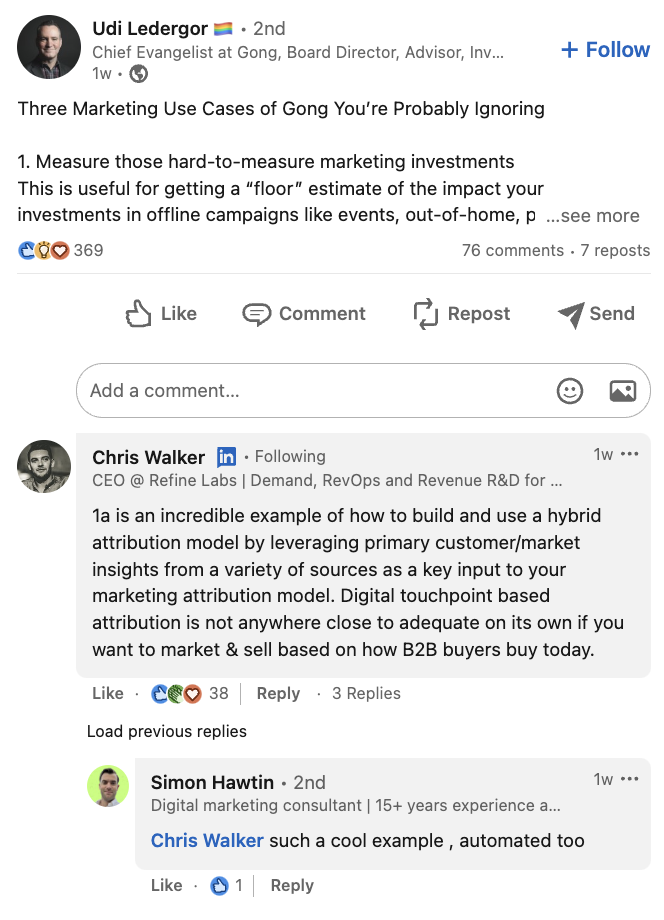
Chris Walker’s comment on Udi Ledergor’s LinkedIn update
Spot the reaction, get to know your audience better, and use the data to start a meaningful conversation.
At the end of the day, that’s the end goal of founder-led marketing.
Is the founder the only one responsible for your brand’s growth, though?
Not quite.
Encourage employee advocacy.
While founder-led marketing is good for putting a face to your brand, employee advocacy is your go-to strategy for:
- building credibility
- amplifying your reach
- humanizing your content
lempire, a company crafting SaaS products for B2B, is a good example of bringing employee-produced content to its benefit.
While working on various different products, lempire team embraces employee advocacy in two different ways:
→ By encouraging the team to develop their personal brand and share expert knowledge on social media
→ By sharing company-wide updates and content across the personal profiles of the team
Some examples of employee advocacy content from lempire include:
- storytime updates
- product launch updates
- content teasers
- event announcements
- professional growth milestones
Just take a look at how one of the lempire employees (with 22,000 followers on LinkedIn) shares company’s sources in their updates:
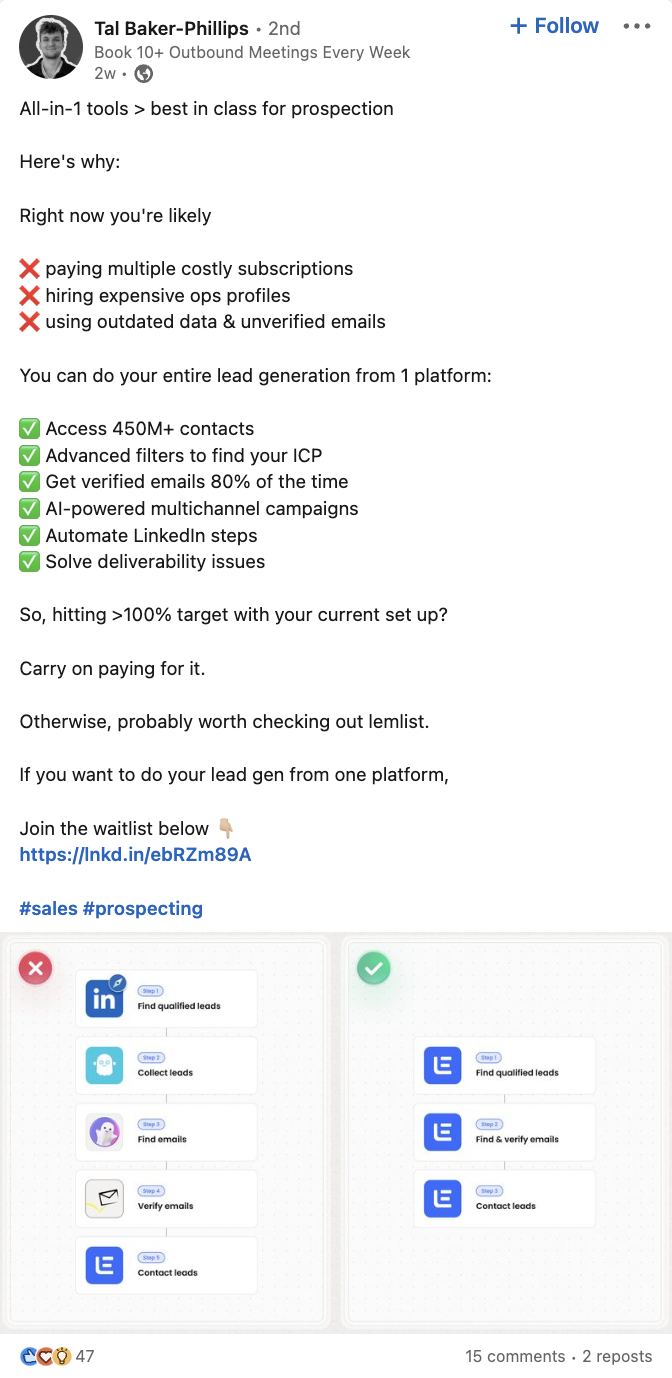
Example of an employee advocacy LinkedIn post
Here are the lessons to take with you if you’re planning to apply this strategy:
1. Embrace different perspectives
Your team is a combination of talent, expertise, and interesting takes on internal processes. And it’s a shame not to use these gems to communicate with your audience.
For example, rather than simply publishing a case study, ask your team to share reflections and insights, create a compelling and engaging piece of content, and let the team add their unique POV while promoting your brand at the same time.
2. Stop treating social selling as a “marketing issue”
As long as you treat content and updates as a marketing realm, you lose your chance to bring the team together and promote your brand.
Keep your team updated on the latest company news and reach out for resharing and asking for relevant feedback.
Here’s a number to think about: distributing content from employees’ personal pages can result in 561% more reach compared to a corporate update.
3. Create a solid brand narrative
When encouraging employee advocacy, you need to make sure the primary brand message doesn’t get lost somewhere along the way.
For example, if lempire is focused on fostering growth for B2B companies, all the products they talk about are driven by the same value.
And employees keep in mind what goal they should pursue with their content.
Once the message is distorted, you’re at risk of increasing content reach with no real impact on your growth.
Wow, that’s a lot of lessons to bear in mind.
We know.
You’re not expected to build a social selling engine in a month.
The cases you’ve looked at above are not the blueprints for scaling your brand.
There’s no playbook for hacking social selling overnight.
But here’s the thing:
As long as you put off selling on social, you’re losing to your competitors. Because you’re not playing by your buyer’s rules.
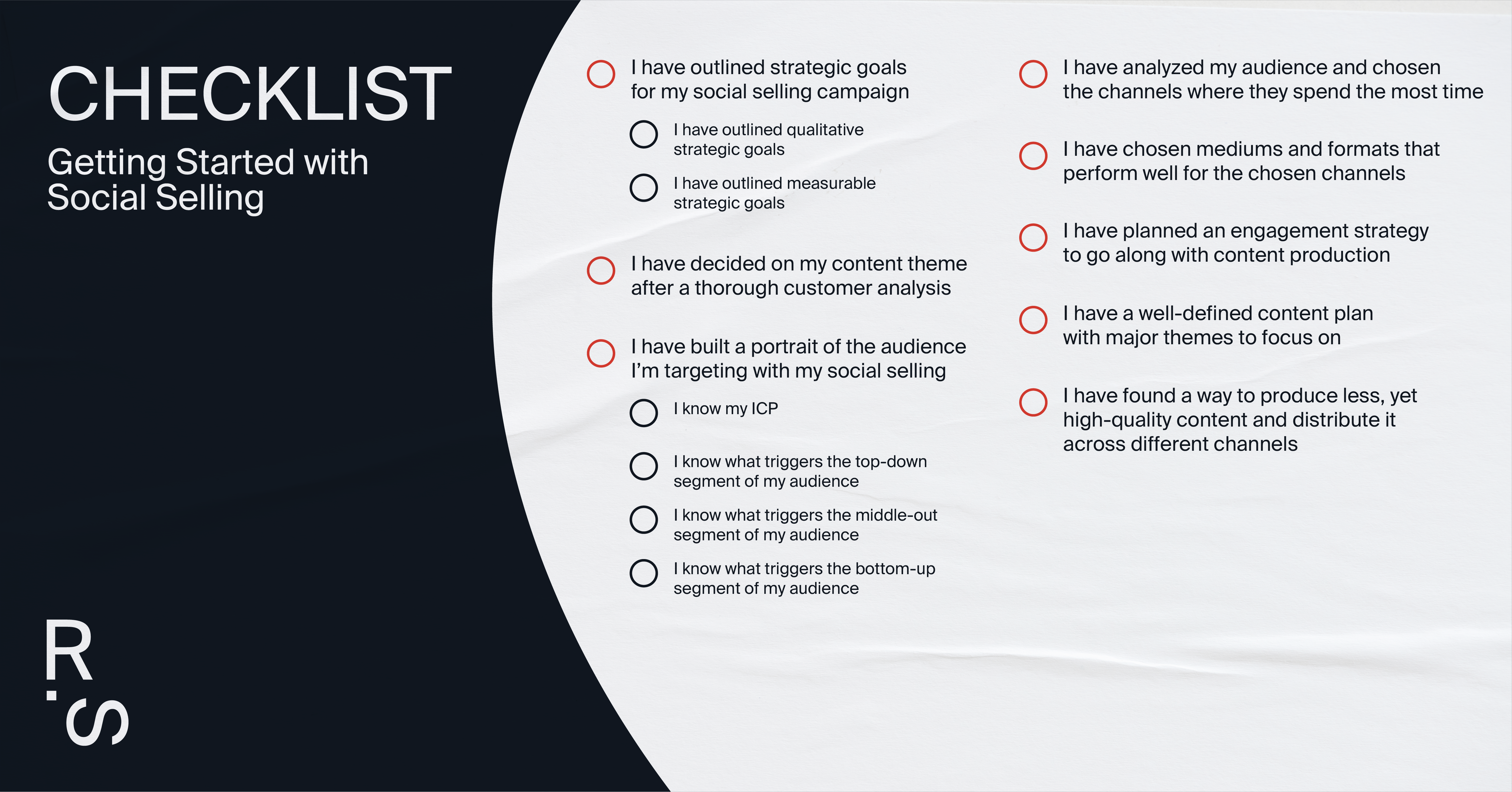
So, if, after looking at these examples, you’re wondering where to start with your own social selling journey one step at a time, we’ve prepared a checklist for you to go through.
Getting Started with Social Selling: A Checklist
1. Start with strategic goals
Getting started for the sake of saying you’re creating demand through content won’t bring you results.
Because you need to know what results you’re expecting in the first place. Think of both measurable and qualitative goals you’re pursuing, for example:
- generate X revenue/qualified leads from a specific social selling channel
- become a thought leader in your niche or industry
- grow your channels by X followers in Y time
Once the targets are set, it’s easier to map out the journey. It’s time to move to the next step.
2. Pick a content theme
The generic one-word theme won’t do.
For example, if you’re a B2B SaaS company that works with process automation of some sort, choosing “process automation” isn’t productive.
Here’s an example of a thinking process to follow:
- You have a product/service that provides a specific solution
- There’s a target audience that can benefit from your solution
- They might benefit from your solution because it addresses certain pain points they’re dealing with.
And that’s where it gets interesting: these pains and expectations should lay the foundation for content that resonates with the audience.
Think of the status quo common for your audience, think about how you challenge it, and educate your audience on the opportunity to build a better business.
At the end of the day, that’s what most companies expect from a purchase.
To become even more specific with your message, pay special attention to the next step.
3. Build an audience portrait
Step away from scrapping generic demographic data for your ICP. Neither location nor job title will help you figure out what value your customer expects.
To learn more about what makes a good ICP, check out our article on effective lead generation.
When you’re satisfied with the target segment you’re working with, use job descriptions as a starting point for outlining your audience’s pain points.
For example, try using Todd Clouser’s hierarchy of content purposes by roles within the company:
- Top-down targeting
This is the type of content you create for strategic decision-makers (think CXO/VP titles).
People with these roles within the company are not included in tactical and routine processes, their main goal is strategic change. So think of global goals they’re addressing and how you contribute to the change.
- Middle-out targeting
These roles are designed for implementing the change within their department, so you need to think of more tactical approaches to improve their team’s performance.
Consider what challenges are faced by department directors, team leads, and managers, and voice the solution for them.
- Bottom-up targeting
This segment is grossly underestimated by companies chasing the big players.
Think of the end users of your solution. They’ll be the ones actually working with it on a day-to-day basis, eventually becoming your brand evangelists.
If you take enough time to cater to the importance of driving change to them, you’ll build a loyal community that talks about your brand and promotes it in the long run.
What’s coming next?
4. Pick a channel and medium
Let’s be honest: trying out every possible channel to get your audience’s attention might be a bit hard to handle.
Instead, use tools such as market research, customer feedback, and buyer persona portraits to figure out the most suitable channel and learn how to work with it.
Once you know how the platform works, pick mediums to work with.
Once again, don’t bite more than you could chew. Start with content formats that could be easily distributed into smaller content pieces.
For example, if you’re planning on growing your presence on LinkedIn, think of the combination of text posts, video formats, and longer pieces of text, such as newsletters, to make sure buyers digest the information in the most suitable way for them.
After you’ve done this, it’s time to think about how to make your content more seen.
5. Design your engagement strategy
In order to make the content seen by more people that meet your ICP criteria, the major task here is to get in front of them.
For example, if you’re trying to take things off on LinkedIn, your first step wouldn’t be to get right into dumping content online. It’s better to be more tactical.
Start by defining the thought leaders in your niche, analyze and engage with their content, and simultaneously build an online presence by starting conversations in the comments.
Later, try to create authentic content and strategically connect with your potential buyers. Allocate time to engage with their content, send a certain number of connection requests, and share content you think would be relevant and valuable.
And when you’re getting used to the algorithm, think of a system to create and share content.
6. Plan content creation and distribution
No matter how often you hear the “consistency is key” advice, it doesn’t get old.
Even if you start with sharing 2 to 3 pieces of content per week, make sure you have a plan up your sleeve.
Here’s a pro tip: Make sure you have an “idea dump” document you (or your team) could work with, and jot down the thoughts and observations from communication with clients to make sure you’ll be using them later.
Using these sparks of content, create content in advance to spend less time on creating it on the spot and seeing the bigger picture of where it leads you.
And here’s another important thing: to get seen across different channels, you don’t have to come up with brand-new content ideas every single time.
A more productive way to set up your social selling strategy is to turn your content into various formats. For example, a video piece you recorded with your team or an expert guest could easily become a blog post, a podcast episode, and several LinkedIn updates.
The only thing that matters is making sure each of these pieces has an end goal in mind.
Last but definitely not least…
7. Keep your focus
Going back to the beginning here for a sec, you can’t expect to get results overnight.
Getting started with the strategy means spending enough time watching and getting used to building long-term relationships.
And in order to build them, you need to constantly adapt to your buyer’s journey and behavior. If you notice they turn to different channels for information or they tend to engage more with a certain type or format of content, adapt to exceed their expectations.
If there were one lesson we’d want you to take from these examples, it’ll go like this:
The social selling process is never static. Because it’s about meeting your buyer where they’re at. And your buyers will never wait for you at the same place.
And if you already know that the social selling journey is for you, but you need assistance or friendly advice on how to map it out, we’re here whenever you need.

